Leading American Generator Brands
Generac: The Proud American Powerhouse
Generac stands as the most recognizable name in domestic American generator manufacturing. Founded in 1959 and still headquartered in Waukesha, Wisconsin, the company builds residential and commercial units in dedicated US facilities. For anyone researching what generators are made in the united states, Generac’s production scale is unmatched. Their home standby units alone account for a massive share of the market.
The company assembles engines, alternators, and control panels in-house, which gives them tight quality control. In my view, this vertical integration is why buyers keep coming back. The Guardian series is their flagship line, designed for automatic backup power. Generac also produces:
- Portable generators for campsites and job sites
- Industrial units for hospitals and data centres
- Inverter generators with quieter operation
Every unit undergoes rigorous testing before shipping, so you get a machine that performs when the grid fails. That is a reassuring thought when load shedding looms!
Kohler: Engineering Excellence from Wisconsin
Kohler’s story begins in 1873, and their generators are still assembled in Wisconsin. That longevity matters when trusting a machine with your home. For anyone researching what generators are made in the united states, Kohler offers industrial precision in a residential package.
Their power systems protect hospitals and data centres, so the domestic range inherits serious engineering. Air cooled models handle heat and prolonged outages without complaint.
- Kohler builds complete generator sets, not just engines.
- Their controllers enable remote monitoring and diagnostics.
- Every residential unit passes a full load test before shipping.
A full load test means the generator runs under real pressure before reaching you. That verification builds confidence. When the municipal supply fails, a Kohler unit responds with steadiness that feels deliberate. During load shedding, Kohler stands among the most reliable answers to what generators are made in the united states.
Cummins: Diesel Generators Built in the Heartland
Cummins traces its roots to a small Indiana workshop in 1919, and the company still assembles generator sets in the American heartland today. For anyone weighing what generators are made in the united states, Cummins represents the diesel end of the market. These machines run on fuel that stores well and delivers real torque when municipal supply fails, which matters when outages stretch for hours!
The heavy duty range is what sets Cummins apart. Units sit on steel skids, bolt into concrete pads, and tolerate the dust and heat of South African summers. I have seen these generators carry full load for days on mining sites. The alternators come from Stamford, but the engine and assembly happen in the States.
- Continuous rated engines for extended outages
- Deep oil pans and oversized radiators for hot climates
- Paralleling capability for multi generator sites
Briggs & Stratton: Small Engines, Big American Legacy
Briggs & Stratton built its name on small engines that start first pull. For South African households managing load shedding, their portable units answer what generators are made in the united states with a practical American option. These machines are not permanent fixtures. They roll out when the grid fails, run the kettle, the TV, and the modem, then go back to the corner.
The company has cast engine blocks in the United States since the early 1900s. Their generators pair those proven powerplants with inverter alternators that handle sensitive electronics without the surge that frightens flat screens. It is a different machine from the industrial diesel units we discussed above. Lighter, quieter, simpler.
- Inverter models that produce clean power for phones and laptops
- Folding handles and wheel kits for easy storage
- Fuel shutoff valves and low oil sensors for safety
Types of Generators Manufactured in the United States
Portable Generators for Homes and Job Sites
Portable generators built on American soil are essential tools for storm season and off grid projects. Their renown comes from robust steel frames and brushless alternators that tolerate dusty job sites. For homeowners, a portable unit with a recoil start and a 30 amp outlet powers refrigerators and well pumps. For contractors, wheeled models with electric start handle multiple power tools simultaneously.
Of the many configurations available, inverter generators are the most efficient for electronics. They produce clean, stable power while using less fuel. Open frame models deliver more raw wattage but have a higher noise level. The question of what generators are made in the united states often leads buyers to inspect the nameplate, since a proud “Assembled in USA” label sits near the engine.
- Recreational portables for camping and tailgating
- Industrial portables for concrete mixers and compressors
- Standby style portables with transfer switch readiness
This variety means the same factory can serve a suburban garage and a remote mine in the Karoo. Each machine reflects American engineering, and careful buyers verify the origin before purchase.
Standby Generators for Whole-Home Backup
According to the American Housing Survey, nearly 5% of US homes now have standby generators. That number climbs each year as power grids strain under climate stress. For those living in South Africa, where load shedding has become a daily reality, the question of what generators are made in the united states carries weight.
Standby generators, unlike their portable cousins, are permanently mounted and wired into a home’s electrical panel. They run on natural gas or liquid propane, which means no fuel storage anxiety. A transfer switch detects outage within seconds, and power returns before the fridge warms. This is not about convenience; it is about preserving a sense of normalcy when the world outside goes dark.
US manufacturing for this category focuses on:
- Air-cooled units for suburban homes
- Liquid-cooled models for larger estates
- Enclosures that reduce noise to a whisper
Each standby system demands a steady hand during installation, but the payoff is measured in quiet confidence!
Inverter Generators for Sensitive Electronics
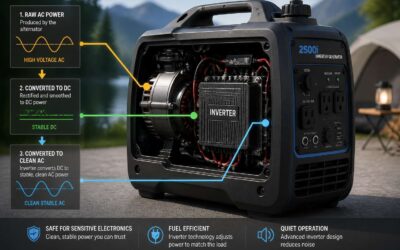
Inverter generators answer a precise challenge in American manufacturing. They convert raw power into a clean sine wave, which protects sensitive electronics. For South Africans who run laptops, routers, and medical devices during load shedding, this matters. Standard generators can produce fluctuations that damage circuit boards.
US makers equip these units with digital control modules and isolated alternators. Output stays under three percent total harmonic distortion. That is safe for your gadgets! They also adjust engine speed to match the load, saving fuel.
- Parallel capability links two units for more power
- Eco mode reduces fuel burn during light loads
- Compact frames allow easy movement and storage
When you ask what generators are made in the united states, inverter models show a different side. They occupy a niche between portability and permanent installation. Each unit delivers precision without demanding a concrete pad or a gas line.
Industrial and Commercial Generators
When a cold storage warehouse in Johannesburg loses power, the clock starts ticking. A home backup unit cannot carry that load. For industrial and commercial environments, American manufacturers build generators designed to run for days, not hours. The engineering demands are different!
These machines use diesel engines with liquid cooling systems. They sit on steel skids or concrete pads. Some produce over 500 kilowatts. Others push into the megawatt range. The engineering focus rests on durability and serviceability, not portability.
Consider what goes into a typical American commercial unit:
– Heavy-duty alternators with brushless design
– Automatic voltage regulators for steady output
– Sound-attenuated enclosures for urban sites
– Paralleling switchgear for multi-unit setups
I have seen procurement teams in South Africa ask what generators are made in the united states before signing contracts. The answer matters because these large units rely on domestic supply chains for parts. Replacement components arrive faster when the factory is in Ohio or Wisconsin rather than overseas.
RV and Marine Generators
Salt spray corrodes unprotected steel within days. This reality shapes the design of RV and marine generators built in American factories. Cummins Onan and Westerbeke dominate this segment with compact diesel and propane machines. These units are engineered differently from home standby generators.
Marine units require:
– Corrosion resistant enclosures that survive continuous salt exposure
– Sealed wiring to keep moisture out of electrical systems
– Sound attenuation for quiet operation near living quarters
– Electronic governors that hold frequency steady despite changing loads
These same engineering traits serve overland caravans in South Africa. When travellers ask what generators are made in the united states for road and water use, these manufacturers appear repeatedly. They deliver steady output in engine rooms and cargo bays where space is measured in centimetres.
Why Choose American-Made Generators
Higher Quality Control and Safety Standards
I remember the night the grid went silent, and the hum of a dependable engine became the only sound of hope! For many South Africans, that reliability is what matters most. When you research what generators are made in the united states, you are also reviewing the quality control and safety standards behind those names. American factories typically run rigorous testing on every unit before it leaves the line.
These standards are not theoretical. They mean your family is protected from voltage spikes and faulty wiring. Consider the specific checks that stand out:
- Every engine is run under simulated load conditions.
- Electrical components are inspected for proper grounding.
- Fuel systems are pressure tested for leaks.
Understanding what generators are made in the united states helps you trust that the machinery in your backyard is built to withstand the harsh, unglamorous nights of load shedding.
Supporting Jobs and the U.S. Economy
When you ask what generators are made in the united states, you are also asking who benefits from your rand. Every purchase feeds a chain of American machinists, testers, and engineers. It is a direct investment in a manufacturing sector that still values hands-on assembly and quality checks.
Consider what your money supports:
- Family-wage jobs in states like Wisconsin and Ohio
- Local suppliers who make the steel, copper, and electronic parts
- Apprenticeships that train the next generation of builders
That chain matters when the grid fails. In South Africa, we know the value of something built by people who stand behind every unit. American factories keep their tooling and their people in place, so the generator you rely on tonight was made by a workforce that answers for every weld. That is a connection you feel during load shedding.
Warranty and Parts Availability
When you ask what generators are made in the united states, the answer also covers the support system behind each machine. American manufacturers maintain extensive parts networks, so a replacement component can reach Johannesburg or Cape Town without months of waiting.
Warranty coverage from these brands is straightforward. A factory backed warranty means the company stands behind its workmanship, not only the initial sale. For South African buyers, this translates to fewer disruptions when the grid fails.
- Local distributors stock common service parts
- Technical support is available from trained specialists
- Warranty claims are handled directly by the manufacturer
That level of accountability matters during load shedding, when a stalled generator creates real losses.
Regulatory Compliance and Certifications
The question of what generators are made in the united states leads to talk about assembly lines and horsepower, but the compliance paperwork tells the real story. American manufacturers build to strict regulatory standards. Underwriters Laboratories (UL) sets safety benchmarks, while the Environmental Protection Agency (EPA) enforces emissions limits. These certifications signal rigorous testing for electrical safety, fuel handling, and noise output. For South African buyers, that means predictable performance during load shedding, without the nasty surprises some imported units deliver.
- UL 1449 for surge protection
- EPA Tier 4 for emissions
- CSA certification for safety
These credentials ease insurance and municipal approval processes. A generator with these marks has undergone third-party inspection. When you ask what generators are made in the united states, consider the certs as part of the answer. They are the quiet reason a unit starts when you need it and stops when you do not.
Where to Purchase Genuine US-Made Generators
Buy Direct from Manufacturer Websites
In 2024, American generator exports to Africa grew by nearly 12 percent, yet many buyers still ask what generators are made in the united states before committing to a purchase. The safest route is to buy directly from manufacturer websites. This eliminates unclear sourcing and gives you a direct line to warranty support.
When you order from Generac, Kohler, or Cummins main portals, you access their current model listings. These pages show factory specifications and genuine part diagrams. For South African customers, most of these sites offer international shipping quotes at checkout. You also avoid reseller markup.
A simple ordering process looks like this:
1. Verify the model meets South African voltage and frequency standards.
2. Confirm the manufacturer ships to your province.
3. Request a customs clearance document from the seller.
Buying direct means the serial number stays in the official database. That matters for future repairs. A third party cannot rewrite your generator’s history. You know exactly what you own and where it was assembled. That clarity alone makes the official website your first stop for any serious purchase.
Authorized Dealers and Local Retailers
Authorized dealers and local retailers offer a different kind of assurance. When you walk into a dealership in Johannesburg or Cape Town, you are seeing units that passed through official distribution channels. The paperwork is traceable, and the chain of custody remains intact from the assembly line to the display floor.
Here is what a legitimate dealer provides:
- A certificate of origin confirming the manufacturer’s U.S. facility
- Service records logged directly with the factory
- Access to region specific firmware updates for your model
Local retailers often hold working demonstration units. You can inspect the build quality before spending a rand. For anyone researching what generators are made in the united states, a dealer network supplies the most direct proof. The serial number matches the factory ledger, and a quick phone call can verify it on the spot.
That physical verification matters. A retailer with a service bay behind the showroom will tell you about common faults they see in the field, and the showroom floor itself settles the question of what generators are made in the united states without guesswork.
Online Marketplaces with Verified Sellers
Online marketplaces present a different problem entirely. Anyone can claim to sell American-built equipment, but verification requires digging. Look for sellers who post the EPA label and the serial number in the listing photos. That label corresponds to the factory record. For what generators are made in the united states, the marketplace filter is wishful thinking. The real filter is the paperwork.
Some platforms now offer verified seller programs. These require proof of distribution agreements.
- Check the seller’s return policy for shipping damage
- Request the certificate of origin before payment
- Confirm the warranty activates in South Africa
The third point matters most. A unit bought from a reseller with no local service network will still run, but your warranty claim may travel overseas. Read the fine print. Verified badges mean the platform collected documents, not that those documents are accurate.
Rental and Leasing Options
Renting offers a practical path to test a unit before committing to ownership. For South African businesses facing seasonal load shedding, a rental agreement converts capital expenditure into operational expense. Ask for the EPA label and certificate of origin on any unit you consider. That paperwork answers what generators are made in the united states without relying on a sales pitch.
Leasing suits long-term standby needs. The leasing company handles maintenance, and you gain access to premium American engineering without the upfront cost. Confirm the warranty activates in South Africa before signing.
- Request the unit’s serial number for factory verification
- Inspect the rental fleet for older models that may predate current emissions standards
- Clarify whether transport insurance covers load shedding failures
Verify the rental company’s service network across your region. A breakdown weeks into a lease can erase any savings from the arrangement.
Government and Commercial Procurement Channels
Tender documents rarely lie. I’ve watched procurement officers reject a unit within minutes when the certificate of origin doesn’t match the serial number. That level of scrutiny is exactly how you confirm what generators are made in the united states. South African state energy buyers and mining contractors demand factory audits before approving any supplier.
The U.S. General Services Administration schedule is another reliable channel. Vendors on that list have passed federal compliance checks. In South Africa, checking a supplier’s Central Supplier Database registration exposes shell companies or re-badged imports.
- Request the federal supply classification code from the vendor
- Ask for a third-party factory audit report
- Match the EPA label against the serial number
For large commercial orders, contact the manufacturer’s government sales desk directly. That team handles utility, defence, and mining contracts. They will confirm what generators are made in the united states and which models only receive final assembly in an American plant.

0 Comments