Assessing Your Facility’s Power Resilience Requirements
Identifying Critical Loads and Essential Systems
When the grid fails in the middle of a night shift, every unpowered minute drags down your bottom line. I have walked through facilities where the backup plan was a handful of extension cords and a prayer, and the cost of that improvisation always surfaces later. Assessing your facility’s power resilience requirements starts with a cold inventory of what actually stops when the electricity stops.
Separate essential systems from convenience loads. Security, communications, and process control usually sit at the top; storeroom lighting and office heating do not. Most South African operations narrow the list to a few genuinely critical functions.
- Security and access control
- Data servers and communication hubs
- Refrigeration and cold chain equipment
- Industrial pumps and climate control
Once that list is mapped, calculate the combined running wattage and start-up surge. That figure sets the minimum capacity for any backup generators cc system. Getting the surge calculation wrong is the most common reason facilities outgrow their generator in the first year.
Evaluating Local Grid Reliability and Outage Patterns
South Africa’s grid behaves differently block by block. A facility in one industrial park may see weekly dips, while another suburb runs for months without a flicker. Load shedding schedules offer a starting point, but they do not capture voltage sags, phase imbalances, or the unplanned outages that follow severe weather. I have seen operations base their backup generators cc decisions on a single winter’s experience, only to find summer thunderstorms tell a different story.
To evaluate your local grid, gather data from your municipality, Eskom’s outage reporting, and your own maintenance logs. Track each incident’s duration and frequency over at least two seasons. This reveals whether your actual exposure matches the published schedule or diverges in ways that change your resilience requirements.
This evaluation matters because backup generators cc sized on assumptions fail. A unit chosen for scheduled load shedding may not handle the extended outages or the rapid cycling that real conditions often produce.
Calculating Total Wattage and Surge Capacity Needs
The first three seconds decide everything. That is when motors demand peak current, and it is the moment undersized backup generators cc trip out. Total wattage is a simple sum. Surge capacity is the number that matters.
Electric motors, compressors and pumps draw seven times their running load on startup. To calculate correctly:
- List every device that runs during an outage
- Record running and starting watts for each unit
- Add the largest surge to the total running load
- Apply a 25 percent safety margin
Facilities with refrigeration, water pumps or conveyor systems need that extra headroom. Most backup generators cc failures I have seen trace back to ignoring the surge gap. Base your decision on the worst case, not average consumption.
Understanding Fuel Source Availability and Runtime Expectations
Your backup generators cc will only run as long as your fuel supply lasts, and facility managers discover this at 2 AM during stage 6 blackouts. When assessing facility power resilience, the critical question is hours of autonomy, not wattage. Load shedding schedules tell you when the grid dies, not how long fuel will stretch.
Runtime expectations depend on tank capacity, fuel burn rate, and refuelling logistics. Diesel is standard for South African facilities, but it degrades when stored for months. Petrol engines demand frequent maintenance. Gas systems require dedicated supply chains. Each fuel has its own storage costs and procurement headaches. Your backup generators cc must match what you can source and store. A runtime assessment requires three checks:
- Calculate the fuel burn rate at 75 percent load
- Confirm delivery lead times from your supplier
- Establish a rotation schedule for stored fuel
The assessment ends with one sobering number: hours of autonomy.
Exploring Generator Technologies and Fuel Options
Portable vs. Standby: Matching the Unit to the Application
South Africa endured 335 days of load shedding in 2023. That reality pushes many to consider backup generators cc. Sinusoidal output defines the modern inverter generator. That pure wave protects sensitive electronics. Diesel units offer durability, but petrol units provide lower initial cost. For a serious backup setup, the choice between portable and standby units hinges on transfer switch complexity. Portable units demand manual connection. Standby units start automatically within seconds. The application dictates the installation.
Consider these fuel properties:
- Diesel offers a longer shelf life.
- Petrol degrades faster but is widely available.
- LPG burns cleaner and has no residue.
I have seen installations fail when the owner mismatched the unit’s output to the physical hookup. Match the technology to the load profile.
Diesel, Natural Gas, or Propane: Pros and Cons for Continuous Operation
Night stretches long when the grid fails. The engine’s drone becomes the only clock that matters. For installations where backup generators cc must run for days, diesel carries the heaviest burden. It consumes fuel slowly, tolerates heavy loads, and remains stable in storage for months. Natural gas offers its own fidelity, flowing directly from municipal mains, never needing a refill, though pressure drops can strangle a starving carburettor. Propane burns clean and leaves no varnish in the fuel lines, but its supply arrives in steel cylinders that empty faster than anticipated.
- Diesel requires less frequent maintenance but demands fuel treatment.
- Natural gas reduces fire risk yet suffers during high-demand winter peaks.
- Propane offers indefinite shelf life but needs large storage tanks.
The fuel choice settles the outcome. Commit to the wrong one and the backup generators cc you trusted will refuse to wake when the lights die.
Inverter Generators for Sensitive Electronic Equipment
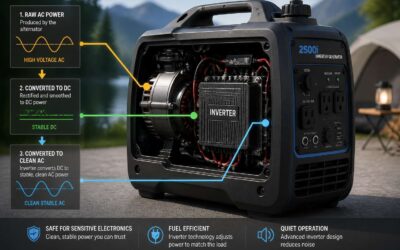
Inverter generators produce clean sine wave power, the kind modern electronics demand. For a home office running a server stack or a medical practice with delicate diagnostic machines, the difference between a conventional generator and an inverter model is stark. A conventional unit can deliver voltage fluctuations that slowly destroy circuit boards.
Consider what really matters:
– Voltage stability under fluctuating loads
– Harmonic distortion below five percent
– Parallel capability for expanded output
In South Africa, where load shedding interrupts the night, backup generators cc must protect the fragile equipment that keeps businesses alive. Inverter technology converts raw AC to DC, then rebuilds it into a steady stream. The result is power that matches the grid’s quality. For installations where backup generators cc serve sensitive electronics, this refinement is essential. Even the most robust generator is useless if its output kills the devices it was meant to protect!
Automatic Transfer Switches and Seamless Power Transition
It takes roughly ten seconds for an automatic transfer switch to decide the grid is dead. Ten seconds of silence from your servers, a receptionist fumbling for a torch, every practice losing its composure. Yet most facilities accept that gap. The switch, not the engine, decides how clean the transition feels. Open transition units break one source before connecting the other. Closed transition units overlap them, which requires both sources to be in sync. For backup generators cc, this choice affects everything downstream.
The key specifications worth scrutinising:
- Contactor type and its current rating
- Voltage and frequency sensing accuracy
- Break-before-make or make-before-break transfer mode
Some controllers add seven day exercisers that run the engine weekly. A well maintained switch will outlive two generators. When load shedding hits, the generator starts automatically, warms up, and hands over power without a single trip to the garage. The best backup generators cc pair modern controllers with simple mechanical interlocks. That combination delivers the seamless transition businesses actually need.
Sound-Attenuated Enclosures and Noise Compliance Considerations
Cape Town’s bylaws cap generator noise at 70 dBA on commercial boundaries. Standard installations often exceed this, which makes sound attenuation the most important specification. Enclosure design uses acoustic foam and spring dampeners to absorb vibration, rather than bare metal. For backup generators cc, this determines whether a city installation gets approved.
Digital controllers now adjust engine speed, optimising combustion and lowering noise output. In dense suburbs, on-site decibel testing before installation is becoming routine.
- Check the manufacturer’s rated decibels at full load.
- Verify the enclosure allows enough airflow for cooling.
- Route exhaust away from adjacent property lines.
Sizing, Placement, and Professional Installation
Performing a Load Calculation to Avoid Undersizing
Nearly 40% of installed generators in South Africa are undersized for their actual load. That statistic should concern every business owner. An undertaxed unit will suffer premature wear and voltage instability. A unit that is too large will waste fuel and money on a continual basis. The only way to avoid this is a formal load calculation performed by an experienced electrician.
The professional measures each appliance and system individually. They consider starting wattage, running wattage, and the potential for future expansion. The resultant figure dictates the precise kVA rating you require from backup generators cc suppliers. Do not trust a salesperson’s estimate. Demand a documented calculation before you purchase anything.
Placement follows the same principle of specialist oversight. A standby unit needs adequate air flow for combustion and cooling. It requires a stable, level base that isolates vibration. Exhaust must be directed away from windows and fresh air intakes. The physical distance to your distribution board also impacts voltage drop and cable costs.
– Obtain a municipal compliance certificate for the installation.
– Ensure the unit is protected from theft and severe weather.
– Verify there is safe access for maintenance personnel.
– Confirm the fuel supply line is installed by a certified technician.
Professional installation ensures your warranty remains valid and your insurance coverage stays intact. The wrong positioning can lead to carbon monoxide hazards or catastrophic engine failure. Your investment deserves the diligence of a qualified hand. That is the route to dependable power, not guesswork.
Factoring in Motor Startup Surges and Harmonic Loads
Electric motors demand up to six times their running current during startup. That surge, combined with harmonic loads from variable speed drives and modern electronics, places stress on every component. A generator sized only for steady wattage will trip or overheat. This is why professional installers measure the true starting profile of your equipment. They also evaluate nonlinear loads that distort voltage and current. Backup generators cc suppliers must be questioned about their capacity to handle these factors.
Placement follows the same logic. Distance to the distribution board affects voltage drop, while proximity influences exhaust and cooling. A qualified hand ensures the unit is grounded to manage harmonics and that the transfer switch is compatible with surge characteristics. The installation must also account for future equipment additions, preventing premature failure and costly upgrades.
Site Selection: Clearance, Ventilation, and Weather Protection
Sizing without considering the physical footprint invites trouble. A unit that runs perfectly in a showroom can fail on site when airflow is restricted. Clearance requirements exist for a reason: generators need room to breathe and technicians need room to work.
Placement carries equal weight. The finest backup generators cc can still suffer when placed against a wall with poor ventilation. Heat buildup degrades performance, and exhaust re-ingestion shortens engine life. Weather protection matters in South Africa’s harsh sun and storm seasons. A canopy shields the control panel and alternator from rain and UV damage.
Professional installers assess wind patterns, prevailing weather, and future equipment additions. Follow these practical rules:
1. Keep at least 1.5 metres of clearance on all sides
2. Position the exhaust away from windows and doors
3. Ensure the base is level and elevated above flood lines
That subtle precision prevents failures that only appear months later. Trusting backup generators cc suppliers who understand site conditions saves more than money.
Electrical Interconnection and Local Code Compliance
Sizing and placement work together with electrical interconnection. A correctly sized unit still fails when the transfer switch is undersized. Professional installers confirm the connection points and local code compliance before commissioning.
South African installations follow SANS 10142-1. This standard governs wiring and protection. Municipal inspectors check earthing, isolation, and changeover mechanisms. Backup generators cc suppliers coordinate these approvals with installers.
Cable runs need protection against mechanical damage and heat. Terminals require torque checking after the first load test. Common installation requirements include:
1. Dedicated earth leakage protection
2. Main switch interlocks
3. Load shedding timers
These details determine whether the system passes inspection. A smooth interconnection prevents voltage drop and neutral issues. That is where backup generators cc companies demonstrate their value.
Permitting, Inspections, and Utility Coordination
Correct sizing means nothing if the generator cannot live where you intend to place it. The footprint, airflow, and service access all need verification before the foundation is poured. Likewise, placement dictates how the fuel line runs and where the exhaust terminates. Municipal bylaws govern these details.
Permitting begins with the application to the local authority. Inspectors review the earthing, the changeover switch, and the physical fixings. Backup generators cc suppliers coordinate these approvals with installers, ensuring the paperwork matches the site reality. Utility coordination then involves scheduling outages and confirming the transfer switch operates without backfeeding the grid.
- Confirm the generator footprint and service clearance before the foundation is poured.
- Verify the fuel delivery route and exhaust direction with the municipality.
- Book utility isolation and live testing well in advance.
The inspection passes only when every element aligns. That final sign-off is what backup generators cc companies handle on your behalf.
Choosing Between Single-Phase and Three-Phase Systems
The moment the lights die, you discover what your generator is truly worth. Sizing demands honesty about every load, from bedside lamps to the borehole pump. A machine that seems generous on paper may stumble under real surge currents. Backup generators cc suppliers study starting behaviour, voltage sag, and future expansion before recommending a rating.
Placement then governs practicality. A concrete pad must sit within reach of the fuel tank, yet clear of windows and vents. Airflow needs a straight path. Professional installation, handled by certified electricians, ensures the cabling, earthing, and automatic transfer switch all work in unison.
Single-phase systems suit most homes and small shops at 230 volts. Three-phase systems carry the heavier loads of workshops, farms, and buildings with lifts. The choice reshapes the alternator and distribution board. We, as backup generators cc specialists, match the system to the site’s true demand.
Maintenance, Safety, and Operational Best Practices
Developing a Preventive Maintenance Schedule
A maintenance schedule transforms a backup generator from a dormant machine into a dependable asset. In South Africa, where load shedding remains a recurring pattern, neglecting routine checks can lead to failure at the worst moment. A weekly visual inspection, monthly load testing, and quarterly oil analysis form the backbone of a sound preventive plan for backup generators cc.
Safety protocols deserve equal attention. Always disconnect the battery before servicing, and never refuel a hot unit. Carbon monoxide poisoning accounts for a significant share of generator related incidents, so placement and ventilation are non negotiable.
- Inspect coolant levels and hoses every 30 days
- Test the automatic transfer switch monthly
- Replace air filters per manufacturer intervals
Documenting each service action creates a history that reveals wear patterns early. This discipline keeps backup generators cc ready when the grid falters.
Regular Load Bank Testing and Battery Health Checks
Load bank testing is the only reliable way to see how a generator behaves under full stress. During the test, the set operates at rated capacity with artificial electrical load applied. This burns off wet stacking in diesel units, confirms cooling system performance, and reveals voltage regulation issues before an outage exposes them. Backup generators cc installed for commercial use should receive this test annually. Renting a load bank costs far less than an emergency failure.
Battery health deserves equal scrutiny, since most generator starting failures trace back to weak batteries. Check terminal torque, inspect for corrosion, and measure voltage under load. In high heat areas like Gauteng, battery electrolyte evaporates faster than the owner’s manual suggests. Always wear eye protection when servicing batteries and neutralise any acid spills with bicarbonate.
- Load test the battery with a conductance tester every quarter
- Clean terminals and apply dielectric grease annually
- Replace batteries beyond their 36 month service life proactively
These habits keep backup generators cc honest about their readiness.
Carbon Monoxide Hazards and Proper Exhaust Routing
Backup generators cc owners often underestimate carbon monoxide. This gas has no colour and no smell. It simply replaces the oxygen in your blood until you fall asleep and never wake up. Not the kind of nap anyone needs.
Exhaust routing on backup generators cc must direct fumes well away from doors, windows, and air conditioning intakes. A unit tucked against a wall might look tidy. It might also recirculate poison straight into your boardroom.
Check exhaust clamps and gaskets during every service. Rust holes and loose joints turn a safe unit into a hazard.
- Position the exhaust outlet downwind of occupied areas
- Never run a portable unit inside a garage or loading dock
- Install carbon monoxide detectors in adjacent buildings
The cost of a detector is trivial. The cost of ignoring exhaust routing is not.
Remote Monitoring and Automated Diagnostic Alerts
A generator that sits silent for months can fail the moment you need it most. Remote monitoring changes that equation for backup generators cc. These systems track runtime hours, battery voltage, coolant temperature, and fuel levels in real time. You get the data before a small issue becomes a costly failure.
Automated diagnostic alerts do the heavy lifting. They catch voltage irregularities, oil pressure drops, and starter failures while the unit is still idle. That matters in South Africa, where a single missed alarm could mean days without power.
- Battery health and charger status
- Coolant temperature and pressure
- Fuel consumption and leak detection
I have seen operators rely on manual checks and pay for it. A monitored unit flags problems early, often with a simple SMS or app notification. For backup generators cc, that level of visibility turns maintenance from guesswork into a scheduled routine.
Budgeting, Financing, and Long-Term Value
Comparing Upfront Costs, Installation Fees, and Ancillary Expenses
The true cost of a backup generators cc installation extends far beyond the purchase price. In my experience, many South African homeowners focus solely on that shiny quoted unit price, only to be stunned by the ancillary expenses that follow. Installation fees alone can consume a frightening chunk of the budget, especially when site prep, concrete pads, and weatherproof housing come into play.
Financing options have expanded significantly. Some suppliers offer rent-to-own agreements; others partner with banks to provide structured term loans. Compare the total cost of each option, including interest and maintenance contracts, before signing anything.
An honest budget for any backup generators cc project should include:
– Delivery and rigging fees
– Electrical connection and changeover wiring
– Fuel storage and delivery logistics
– Ongoing service and oil changes
Long-term value beats the initial price tag every time. A fuel-efficient unit with a longer lifespan pays for itself within a few years, especially when load shedding remains a persistent reality.
Exploring Tax Incentives, Rebates, and Grants for Backup Power
When budgeting for backup generators cc, consider the tax landscape alongside the hardware. South Africa’s energy incentives have evolved, and businesses that install qualifying systems can claim deductions under Section 12B of the Income Tax Act. This allowance lets you write off a portion of the asset’s cost, which softens the financial sting of a substantial installation. Homeowners should also check municipal rebate programs, although these vary widely by region.
Financing remains the bridge for many households. A rent-to-own plan spreads the cost, but the monthly premium often covers maintenance too. Banks offer term loans with fixed rates, which simplifies planning.
For long-term value, remember:
– Track your payback period against load shedding hours
– Compare your diesel consumption against Eskom tariff hikes
– Factor in resale value when upgrading your system
These figures matter more than the sticker price. Backup generators cc units that run efficiently for years will outperform a cheaper model that guzzles fuel every time the grid fails.
Calculating Downtime Cost Savings and Business Continuity ROI
Every hour of load shedding carries a price tag that rarely appears on an invoice. When you calculate downtime cost savings, factor in lost production, idle staff wages, and spoiled inventory. A single extended outage can erase months of operational profit. That reality shapes how I advise clients on budgeting for backup generators cc.
Financing becomes less intimidating when the numbers tell a clear story. The monthly premium on a loan feels heavy until the first grid failure hits and your operation keeps running. Business continuity ROI is measurable, and it changes how you view that instalment!
Consider what your operation loses per hour:
- Idle labour costs
- Perishable stock write-offs
- Missed delivery penalties
- Client churn from broken promises
Those figures transform backup generators cc from an expense into infrastructure. The unit that keeps your business running through winter blackouts pays for itself in ways that never appear on a balance sheet.
Leasing vs. Purchasing: Flexible Acquisition Models
Budgeting for backup generators cc starts with an honest assessment of what your operation can carry each month. A hire purchase agreement spreads ownership costs over three to five years. Cash buyers avoid interest but tie up capital that might serve better elsewhere.
Leasing flips the equation entirely. Monthly rentals on backup generators cc often include servicing and replacement parts. That predictability suits seasonal businesses with uneven revenue streams.
- Short-term projects favour flexible rental terms
- Permanent facilities benefit from ownership
- Maintenance inclusion changes the real comparison
Financing structures differ across South African suppliers. Compare annual percentage rates rather than instalment sizes. The decision between rental and purchase shifts once service contracts enter the picture.
Warranty Coverage, Service Contracts, and Extended Support Plans
Budgeting for backup generators cc requires confronting the detailed terms. The monthly rental may include servicing, but ownership demands cash reserves for failures. I’ve seen warranty coverage exclude labour after year one, leaving businesses to pay the full cost.
Financing structures vary, and the annual percentage rate should guide your decision. Extended support plans can protect you only if response times are guaranteed. Compare total ownership costs, not instalments.
Long-term value hinges on service contracts that match your usage. Standard plans often skip damage from poor fuel or surge events. Look for extended support plans with load bank testing and battery checks.
- Warranty exclusions for alternator vs engine.
- Service contract response time guarantees.
- Coverage for voltage irregularities.
A prudent budget for backup generators cc includes these protections. The hardware matters less than the warranty that stands behind it.

0 Comments