Understanding 220-Volt Power Solutions
What Does 220V Output Mean for Your Equipment
Many South African households rely on generators 220 for load shedding. Yet a common misunderstanding is that a 220V output will harm your appliances. In reality, the national grid supplies around 230V, and most devices tolerate a voltage range of 200 to 250V. That tolerance is your safety net.
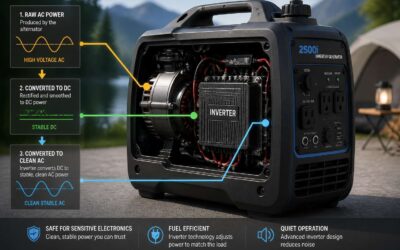
In my experience, fridges, pumps, and lights handle 220V without complaint. However, delicate electronics such as computers or medical devices may prefer a stable sine wave. A generator’s output quality matters as much as its voltage.
Here is a quick breakdown of typical loads:
- Resistive loads: kettles and geysers, unaffected by voltage variations.
- Inductive loads: motors in fridges or tools, require extra starting surge.
When shopping for generators 220, check the wattage ratings before plugging in. That simple step prevents most compatibility surprises!
Common Applications for High-Voltage Portable Power
Imagine a world where your kettle decides its own schedule. That world is called South Africa during load shedding. For most homes and businesses, generators 220 remain the most dependable way to keep the tea flowing and the till ringing. These units are not about delicate nuances; they are about raw, purposeful power for everyday needs.
- Powering multiple appliances simultaneously, such as fridges, freezers, and sump pumps.
- Running essential lighting and security systems during extended outages.
- Feeding power tools on job sites where the local substation is having a nervous breakdown.
The beauty of a 220V system is its ability to match the grid’s normal output, so you simply plug in and carry on. No adapters, no fuss, no apologising to your coffee machine for the inconvenience.
Key Differences Between Residential and Commercial Models
Understanding 220-Volt Power Solutions requires looking past the socket on the wall. The voltage figure tells only half the story. What separates a residential unit from a commercial workhorse is duty cycle, fuel endurance, and how the alternator handles sustained stress. A home model might comfortably run a fridge and a few lights through a night of load shedding. A commercial unit must survive twelve hour shifts with angle grinders and compressors cycling on and off.
Residential generators 220 typically arrive with air cooled engines and compact fuel tanks. Commercial generators 220 lean toward liquid cooling, sturdier frames, and easier access to service points. They also manage fluctuating loads with greater stability.
- Residential units prioritise quiet operation.
- Commercial units prioritise runtime and maintenance access.
- Commercial alternators handle imbalanced loads more gracefully.
Matching the right class to the workload prevents premature wear. Overbuying wastes capital, while underbuying invites breakdowns at the worst possible moment.
Key Specifications and Features to Evaluate
Continuous Power vs. Peak Power Ratings
Most buyers fixate on the peak number on the box, yet that figure only lasts for a few seconds. Continuous power is the rating that keeps your kettle boiling and your lights on during a Cape Town winter. For generators 220, the gap between these two ratings reveals the true quality of the motor and alternator.
- Running watts at full load
- Starting surge capacity for appliances like fridges
- Duty cycle percentage at rated load
- Voltage regulation tolerance
A unit with a 20% gap between peak and continuous power is fine. A 50% gap often means cheap components. Check the fuel consumption curve as well, because that determines whether the continuous rating holds up over a long outage. When comparing these units, always ask for the continuous rating in the manual.
Engine Type, Runtime, and Fuel Efficiency
Engine type determines whether generators 220 hold up over years of use. In South Africa, the choice between a single cylinder OHV and a V twin often comes down to how many hours you need the machine to run. Runtime figures on the brochure assume a quarter load, which is not how real life works. A 12 hour claim at 25% load can shrink to four hours at full draw, especially when your borehole pump keeps cycling.
Fuel efficiency follows the torque curve. Diesel units use less fuel than petrol engines, and I have seen a 5 kVA diesel unit run a smallholding for two days on one tank. Look for the hour meter, because that tells you the true story of maintenance intervals. Choose your generator 220 based on the engine that matches your load profile, not the marketing sticker.
Outlet Configurations and Voltage Regulation
Most people check the wattage first. They ignore the sockets. That is a mistake. The outlet configuration on generators 220 determines what you can plug in. In South Africa, the mix of 16 A and 32 A sockets matters more than the total power figure. I have watched a single 16 A outlet trip the moment someone runs a welder and grinder together.
Voltage regulation is the hidden variable. Cheaper units let the output drift when the load changes. Sensitive electronics hate that! An AVR holds the output steady within a few percent. Without it, a voltage sag can reset your controller or damage a pump motor.
The specifications that separate useful generators 220 from frustrating ones:
- Number of 16 A and 32 A outlets, not just total
- Whether each socket has its own breaker
- The AVR spec, not the marketing name
- Voltage tolerance stated in the manual
Portability, Frame Design, and Wheel Kits
Nobody buys a heavy machine expecting a workout, yet many generators 220 owners discover too late that the frame and wheels were an afterthought. The steel gauge matters. A folded 1.2 mm frame flexes under a full fuel tank. Small 200 mm wheels sink into soft ground, while 300 mm pneumatic tyres roll over obstructions without drama.
Lift points are worth inspecting before purchase. Some commercial units include a central lifting eye for a crane or forklift. Residential models rarely have either. The handle height affects balance. A telescopic handle with a locking pin beats a fixed bar. Consider these portability features:
- Centre-mounted wheels for weight distribution
- Distance between wheel mounting points affects stability
- A fold-down handle that clears the control panel
- Rubber feet that prevent frame gouging in concrete
Portability is about more than rolling. Structural choices keep the frame from twisting when you drag it across uneven terrain.
Noise Levels and Enclosure Technology
Near a suburban boundary wall, the difference between a 68 dBA unit and a 76 dBA generator is the distance between a neighbour’s nod and a formal complaint. Decibel ratings matter, but enclosure technology shapes the sound as much as the figure itself. An open-frame generator 220 model throws mechanical clatter in every direction, while a fully enclosed housing directs noise downward and absorbs high frequency whine.
Inspect the soundproofing layers, not just the outer shroud. Acoustic foam density, air intake geometry, and exhaust routing all contribute to the final voice of the machine. Some enclosures use a labyrinth of baffles that reduce noise without choking airflow. A sealed box that traps heat will silently derate your power output, so check the ventilation path carefully.
- Verify the dBA rating at seven metres, the industry standard
- Confirm the cooling fan draws air across the alternator, not just the engine
- Look for a removable access panel that does not disturb the acoustic lining
Generators 220 with premium enclosure technology cost more, but they permit evening operation in residential areas without turning your yard into a public nuisance.
Selecting the Right Unit for Your Needs
Matching Wattage to Your Essential Equipment
Selecting the right unit begins with a ledger of your necessities. When the grid falters, the machines you choose to sustain become a matter of quiet reckoning. South African load shedding has taught many households which appliances truly matter, and which are mere indulgence.
Start with the essentials. A fridge, a few lights, a security system. Sum their running wattages, then account for the starting surge of the refrigerator, which can briefly demand three times its operating figure.
Consider this hierarchy:
– Fridge and freezer
– Lights and Wi-Fi router
– Security alarm and electric fence
– A single kettle or microwave
If your total lands near 2,500 running watts, consider generators 220 with a 3,500 peak rating for safety margin. For those weighing generators 220, overestimating leaves you safe; underestimating leaves you in darkness.
Single-Phase vs. Three-Phase Output Considerations
Most South African households run on single-phase power. Your wall sockets, lights, and appliances all draw from this standard. For home backup, generators 220 with single-phase output are the obvious match. I have seen too many buyers assume bigger means better, only to discover a three-phase unit that will not even power their kettle.
Three-phase output serves a different master. Industrial compressors, large pumps, and heavy machinery demand that configuration. If your workshop depends on three-phase supply, you need generators 220 that carry the correct breaker layout. A mismatched phase connection will stall your equipment or risk damage to sensitive electronics.
- Check your Distribution Board for the incoming supply type
- Confirm the main breaker rating and phase configuration
- Ask an electrician which output matches your installation
Choosing the wrong phase breaks your system from the first start. The right alignment disappears into quiet, reliable operation.
Comparing Electric Start, Recoil Start, and Remote Start Options
In the South African context, loadshedding often strikes without warning. The convenience of electric start means a simple button press brings your generators 220 to life. No wrestling with pull cords, no fiddling with choke levers in the dark. For larger units, electric start becomes almost essential given the compression resistance of big engines.
Recoil start remains the dependable standard for smaller machines. A firm pull engages the flywheel and the engine catches. It is mechanical, simple, and never depends on a charged battery. Many homeowners prefer this for a backup unit that sits idle for months.
When you evaluate which starting system fits your routine, break it down by how often you expect to run the unit:
- Electric start suits buyers who run their generators 220 daily in an outage.
- Recoil start suits the weekend user who only needs temporary power.
- Remote start suits anyone who wants to fire up the machine from indoors.
Budgeting for Purchase, Fuel Storage, and Operating Costs
Your budget extends beyond the purchase price. The true cost of a generators 220 includes fuel, maintenance, and storage. Petrol degrades quickly in South African heat, so you need a rotation system or stabiliser. Diesel units burn cleaner but cost more upfront. Storage space determines what size tank you can safely keep. A 5 kVA unit running for eight hours daily consumes roughly 15 litres. That adds up fast during extended loadshedding.
Consider these costs:
- Fuel consumption per hour at 50% load
- Oil changes every 100 running hours
- Battery replacement for electric start models
- Security mounting or housing
The initial price difference between a 3 kVA and a 7 kVA unit often disappears within two years of operation.
Installation, Safety, and Maintenance
Proper Placement and Ventilation Requirements
Placing a generator on a wooden deck or inside a garage is a common mistake, yet it can turn a power outage into a crisis. Carbon monoxide buildup is silent and swift. For any of the generators 220 you are considering, proper placement is non negotiable. You need at least three meters of clearance from windows, doors, and vents. The unit must sit on a stable, level surface that prevents vibration from walking the machine across the floor.
Ventilation keeps the engine cool and prevents overheating. A confined space traps exhaust and heat, which damages components. Check the air intake and exhaust ports regularly for dust or debris, especially after a dusty Highveld wind. Make it a habit to inspect fuel lines for cracks. Tighten loose bolts. A five minute check before each use prevents costly failures.
Transfer Switches and Electrical Panel Connections
A transfer switch sits between utility power and your generators 220. Without one, backfeeding the panel creates a hazard for lineworkers and your household electronics. I always recommend a manual transfer switch for its simplicity and reliability. The connection at the electrical panel demands attention to phase alignment and breaker sizing.
Key considerations for the panel side:
- Neutral bonding must match the panel configuration, whether bonded or floating.
- A licensed electrician should handle the interlock installation.
- Monthly testing under load confirms the switch responds instantly.
These checks ensure your generator answers when the grid fails, delivering steady power instead of a surge. The panel connection completes the link between machine and home.
Grounding Practices and Circuit Protection
Nearly half of the generator callouts I attend trace back to poor grounding. That number might sound high, but it holds true across the farms and smallholdings I visit in South Africa. Grounding practices decide whether your generators 220 deliver steady current or become a danger to everything connected to them.
Here is what I verify during every installation:
- Copper earth stakes driven deep enough to reach moisture
- Correct earth-neutral bonding for the selected mode
- Residual current devices rated for the generator’s output
Portable generators 220 need particular attention. The frame must connect to a dedicated earth electrode, separate from the house system. Circuit breakers on each outlet protect against overloads. I always verify that each breaker trips at the rated amperage before relying on it! A loose neutral connection defeats even the best protection, so I torque every terminal to specification.
Routine Service Intervals for Long-Lasting Performance
Installation starts with a level surface and a clear plan. Generators 220 that sit unevenly vibrate against their own frames, loosening bolts and stressing the alternator. I have seen machines mounted too close to walls or stacked with tackle. The manual gives clear clearances; those numbers exist for a reason.
Safety extends beyond electrical work. Refuelling a hot unit is a common blunder, and fuel spilled on a warm muffler does not end well. Let the machine cool before you touch the tank cap. Keep hands clear of rotating belts and store fuel in approved containers.
Maintenance follows a rhythm. Service intervals depend on hours, not calendar dates. For typical generators 220 on smallholdings, the schedule should cover:
- Oil changes every 100 operating hours
- Air filter cleaning every 200 hours
- Spark plug replacement each season
Log every service so wear patterns appear quickly. Routine checks keep the unit dependable across heavy seasons.
Troubleshooting Common Voltage Fluctuation Issues
Many owners of generators 220 treat installation as a weekend afterthought. I have watched units placed on grass, where moisture creeps into the alternator. A concrete slab and correct clearances prevent most early failures. The manual specifies distances to walls; those numbers reflect airflow, not preference.
Safety requires a clear head. Complacency makes you check the output without disconnecting the load. That is wrong! Voltage fluctuation often begins with a loose terminal, not a faulty AVR. Every connection must be checked under load, and the machine should cool before panels open.
- The voltage regulator wiring must be inspected for corrosion.
- The capacitor or AVR requires a multimeter test.
- The unit should be loaded to 70% while measuring output at the breaker.
These three checks reveal most instability. When generators 220 fluctuate, the cause is rarely mysterious. It is usually a connection or a worn brush.
Storage and Off-Season Care Guidelines
Roughly 70% of generator storage failures trace back to neglect during off-season months. Installing a generators 220 on bare grass ranks as another classic error. Moisture creeps toward the alternator faster than load-shedding returns. A concrete slab and sensible clearances keep the machine breathing.
Safety demands a clear head. Disconnect the load before checking output. Let the unit cool before you open a panel. Complacency causes mistakes in the field.
Storage deserves equal respect. Fuel goes stale. Batteries drain. Corrosion works while you ignore it.
Off-season checklist:
– Stabilise or drain the fuel
– Cover the unit loosely
– Run the engine monthly
An ignored machine will fail at the worst moment, guaranteed! Proper off-season care turns that predictable failure into a non-event.

0 Comments