Understanding Your Wind Energy Options
How Wind Generators Work for Homeowners
Sure, here is the content item.
South Africa has over 3,000 MW of installed wind capacity, but homeowners rarely benefit. When you browse wind generators for sale, you face two main configurations: battery-based off-grid systems and grid-tied units with net metering. Your choice depends on local wind speed and load shedding schedules. Understanding your wind energy options means measuring your site’s average wind at hub height, not ground level.
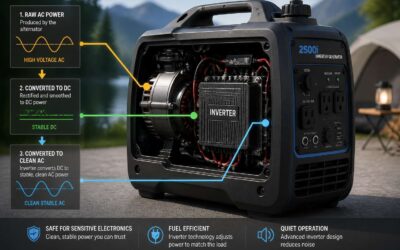
How wind generators work for homeowners is straightforward. Blades spin a shaft connected to a permanent magnet alternator. That produces three-phase AC, which a rectifier converts to DC for battery storage. An inverter turns DC into AC for your appliances. A charge controller prevents overcharging.
Before comparing wind generators for sale, check these items:
- Local zoning rules for tower height
- Average wind data from nearby stations
- Distance to trees or buildings
These factors decide if a turbine makes sense. Without wind, no generator delivers value.
Small Wind Turbines vs. Utility-Scale Generators
South Africa’s utility scale wind farms generate up to 2.5 MW per turbine. A rooftop machine might manage 5 kW. Scanning wind generators for sale reveals both, yet their economics diverge completely. Residential models cost five times more per kilowatt, which I find startling.
Municipalities chase mega projects because utility installations spread fixed costs across millions of units. Homeowners face load shedding schedules and battery replacement cycles instead. Compare the following:
- Total installed cost per kilowatt of rated capacity
- Annual energy yield per square metre of rotor area
- Maintenance obligations across a 20 year lifespan
- Grid connection rules for your municipality
Utility generators sell power. Small turbines store it. Some households want independence. Others prefer selling power back to the grid.
Horizontal Axis vs. Vertical Axis Turbine Designs
What spins efficiently in Johannesburg wind may stall in Cape Town gusts. That reality separates horizontal axis from vertical axis turbine designs. Horizontal axis machines dominate wind generators for sale listings, but vertical axis alternatives present a different engineering tradeoff.
A horizontal axis turbine demands steady, directional airflow. A vertical axis design captures turbulence from any angle, a trait that matters for suburban roofs flanked by walls and trees.
- Horizontal axis: higher efficiency in open, uniform wind fields
- Vertical axis: quieter operation, lower mounting height, better tolerance for uneven airflow
Both configurations suit different site profiles. I lean on measured wind data rather than rotor aesthetics when advising clients.
Key Components of a Complete Wind Power System
South Africa’s installed wind capacity passed 3.4 GW in 2024, yet most homeowners still underestimate what a complete system entails. The turbine itself is only half the story when you evaluate wind generators for sale. A functional setup demands several moving parts:
- a charge controller to tame voltage surges
- a battery bank sized for wind lulls
- an inverter matched to your daily loads
- a tower engineered for local gust patterns
I have watched buyers invest in a superb rotor only to stall on mismatched cabling. Before committing to any purchase, map your energy consumption, then work backwards to tower height and blade diameter. The controller regulates spikes, the inverter converts DC to AC, and the battery buffer absorbs turbulence. Skip one element, and the entire chain underperforms.
Estimating Your Property’s Wind Energy Potential
South Africa’s Renewable Energy Independent Power Producer Programme has mapped wind corridors, but your specific koppie or valley tells its own story. Before scanning wind generators for sale, measure the resource where you intend to raise the tower.
I have seen homeowners trust a neighbour’s muddled recollections instead of their own readings. A three month anemometer survey beats any rainfall map. Wind speed doubles your energy yield for every eight knots gained, so height matters more than rotor diameter. The South African Wind Energy Project’s data offers a provincial baseline, yet local turbulence from escarpments and ridgelines can skew the picture.
Consider these evidence points:
1. Seasonal wind shifts in the Western Cape differ sharply from the Eastern Cape’s summer gusts.
2. Gust factor, not average speed, determines structural stress and turbine survivability.
3. Your municipal zoning and aviation clearance affect viable tower heights before you ever compare price.
That dataset, patiently collected, turns guesswork into an engineering decision.
Evaluating Costs, Incentives, and ROI
Federal Tax Credits and State Rebate Programs
South Africans spent billions on diesel generators during load shedding, yet those machines only consume. A wind turbine, purchased with intention, produces. That shift from paying for power to owning it changes how you think about every gust.
Tax incentives exist. Section 12B of the Income Tax Act allows accelerated depreciation for renewable energy assets, and some municipalities offer property rate rebates. The math requires patience.
- Calculate your consumption baseline
- Model turbine output against wind data
- Factor maintenance and inverter replacement
When you compare wind generators for sale, look beyond sticker price. The payback period stretches over years, but each kilowatt hour you generate is one less purchased from an increasingly expensive grid.
Calculating Installation Costs Beyond the Turbine
Purchasing wind generators for sale is only the first expense. The turbine itself often accounts for half the total outlay. Installation costs include site preparation, concrete foundations, tower erection, and electrical connection. You might also need a new inverter, battery bank, or grid-tie equipment. Engineering permits and municipal approval fees vary across provinces.
- Foundation and excavation: R30,000 to R80,000
- Tower and guy wires: R20,000 to R50,000
- Electrical wiring and switchgear: R15,000 to R40,000
Labour costs for a certified installer add another expense. Some companies bundle installation with the purchase price, but examine the terms. A cheap quote might exclude crane rental or trenching. When evaluating ROI, calculate the full system cost, not the sticker price alone. That number determines your payback period.
Estimating Payback Period and Long-Term Savings
South Africans often ask me how long before a wind system pays for itself. The answer depends on the full system cost, not the sticker price. Your payback period begins when you divide that total investment by your annual electricity savings. If your property catches steady winds, the numbers shift favorably.
Several variables shape the calculation:
- Your current tariff rate and its yearly escalation.
- The average wind speed at your hub height.
- Financing costs if you use a loan.
- Local municipal rate adjustments.
Long-term savings exceed the simple payback horizon. Consider a quality turbine’s lifespan, often twenty years or more. After the payback point, your savings become pure yield. Compare that yield against grid electricity, which climbs yearly. For many households, wind generators for sale offer a fixed energy price in an inflationary world. Use your actual consumption data to model the outcome. A realistic estimate beats a hopeful guess.
Net Metering and Selling Excess Power Back to the Grid
South Africa’s net metering rules shifted in 2023, enabling homeowners to sell excess power back to the grid at municipal-set rates. This changes the calculus for wind generators for sale. Instead of banking every kilowatt in batteries, your turbine becomes a revenue source.
Evaluating costs means understanding your local feed-in tariff. Some municipalities pay flat rates per kWh, others use time-of-use structures. Factor in the bidirectional meter and grid connection fees. Those expenses trim your ROI, but they often outperform battery storage.
When sizing your financial model, consider these variables:
– Buy-back rate per kWh from your municipality.
– Whether credits expire at year-end or roll over.
– Inspection and meter installation costs.
Surplus generation offsets peak-time purchases, which is tangible savings. As Eskom tariffs climb, a fixed buy-back rate creates a curious inversion. Your excess power gains relative value each year. For many properties, that edge turns wind generators for sale into a formidable hedge against inflation.
Hidden Costs: Maintenance, Insurance, and Repairs
A turbine is not a set-and-forget machine. Maintenance, insurance, and repairs form the quiet third of your ownership expenses. Moving parts face constant stress, and South African weather adds its own wear. Budget 1% to 2% of system cost annually for upkeep. Skip that figure and your ROI projections become fiction.
Don’t assume your home policy covers the gear. Standard plans often exclude renewable equipment, so arrange explicit coverage for wind generators for sale. Repair costs vary widely. Gearboxes and bearings fail under load, and accessing a 20 meter tower requires a crane.
- Annual bearing and blade inspections
- Gearbox oil and filter changes
- Lightning surge protection replacement
Service contracts shift maintenance risk to professionals. Self-insurance works too, but only if you set aside cash every month. The market for wind generators for sale keeps expanding, yet the real expense lives in what happens after installation.
Selecting the Right Unit for Your Needs
Grid-Tied vs. Off-Grid Wind Generator Systems
The Karoo wind imposes an unyielding authority. Choosing between a grid-tied and an off-grid system is a question of survival, a choice between dependence and vigilance. Grid-tied wind generators for sale offer a connection to municipal utilities, but they cease to function during load shedding. Off-grid turbines demand batteries, controllers, and a tolerance for uncertainty. South Africa’s erratic power supply makes this decision urgent, and I have seen buyers choose units based on advertised wattage rather than their actual nightly consumption. The true metric is the relationship between storage capacity and local wind persistence. Trust me, that is not obvious! When you browse wind generators for sale, scrutinize the inverter’s harmonic compatibility and the grid’s fault levels. A system sized for gale force will fail in the doldrums. Select a unit that aligns with the measured wind speed at your hub height, not with the marketing noise.
Matching Output Capacity to Your Household Demand
Most South African households consume between 250 and 450 kWh per month, yet many wind generators for sale are advertised with peak outputs that far exceed reality. I have watched buyers purchase 5 kW turbines for 1 kW homes. The unit you select must match your base load, not your occasional surge.
Observe your meter over a full week. Note the appliances that run continuously. A refrigerator, a Wi-Fi router, and a few LED lights might draw 250 watts. That is your baseline.
- Calculate daily kWh by multiplying your constant draw by 24 hours.
- Add intermittent loads like kettles or pumps only if they occur daily.
- Compare that figure to the turbine’s expected output at your average wind speed.
Only then will you understand which wind generators for sale suit your home. Storage capacity matters, but the turbine’s daily yield is the deciding factor.
Tower Height and Placement Considerations
When comparing wind generators for sale, tower height often decides success or failure. In the Karoo, a 30 meter mast can double the yield of the same model mounted at 10 meters. Wind shear near the ground is brutal, and turbulence from low scrub distorts the flow.
Placement matters just as much. Your unit needs clear air, free from the wake of roofs, trees, and neighbours’ sheds. Set it at least 150 meters from obstructions, or raise the tower above them.
- Keep the rotor blade tip 9 meters above any obstacle
- Orient the yaw into the prevailing winter wind
- Consult municipal zoning for height limits
Map your property’s wind corridors before you buy. A poorly placed turbine on a strong machine will always underperform, no matter how appealing the price tag looks.
Noise Levels, Aesthetics, and Neighborhood Zoning
In South Africa, typical municipal by-laws cap turbine noise at 45 decibels at the property boundary, quieter than a normal conversation. Many homeowners overlook this until after installation. When scanning wind generators for sale, the acoustic signature matters alongside the rated power. A direct drive gearless design hums at a lower frequency than a geared model.
Aesthetics influence acceptance. A gleaming white monopole suits a modern farmhouse, while a lattice tower might clash with a heritage setting. Some suburbs demand a colour palette or prohibit visible blades. Requesting the zoning schedule from the local municipality reveals setbacks, height restrictions, and noise limits. A building plan approval or an environmental impact assessment might be required.
- Neighbourhood aesthetic guidelines often dictate blade colour
- Manufacturer decibel ratings vary by model
- Temporary mast installation permits are separate from permanent approvals
Battery Backup and Hybrid Solar-Wind Configurations
Most South African homeowners browse wind generators for sale with only a power rating in mind. That approach ignores the real variable: your load profile. A unit sized for a weekday home with solar pre-charging behaves differently than one serving a workshop at night.
Battery backup changes the sizing math. With a hybrid solar-wind configuration, the turbine can top up batteries during winter overcast days when solar panels produce a fraction of their summer yield. This pairing smooths the intermittency of both sources.
Weigh these factors:
- Daily consumption in kilowatt-hours, not peak demand
- Depth of discharge your battery chemistry tolerates
- Wind resource at your hub height, not ground level
- Inverter compatibility with the turbine’s charge controller
The wind generators for sale that pair well with existing solar arrays often use a separate charge controller, allowing each source to feed the battery bank independently.
Weather Resistance and Durability in Extreme Climates
The Cape’s south-easter can sandblast a poorly sealed turbine in a single season, and coastal salt air corrodes galvanised steel faster than inland rust. For South African buyers, weathering is not an accessory feature; it defines lifespan. When you compare wind generators for sale, look beyond power curves. Sealed bearings, anodised aluminium blades, and marine-grade fasteners matter more than a decorative finish. Electronic housings should meet IP65 or better, with a charge controller protected from humidity.
– Stainless steel bolts and hinges
– UV-stabilised blade material
– Corrosion-resistant brake mechanism
Durability in extreme climates also means thermal tolerance. Inland Free State winters and Mpumalanga highveld thunderstorms demand a unit that sheds ice and shrugs off lightning. Redundant braking systems and shroud-tested blades survive longer, lowering the real cost per kilowatt-hour over twenty years. Choose wind generators for sale that document their salt-spray and wind-tunnel results, not just marketing photographs.
Comparing Top Brands and Popular Models
Leading Manufacturers in the Residential Wind Market
Bergey, Primus, and Fortis have become household names among South African homeowners, but their differences are stark. The Bergey Excel 10 delivers steady 7 kW output for large off-grid estates, while the Primus Air 40 targets small battery banks with its 0.4 kW capacity.
When browsing wind generators for sale, focus on alternator design and blade resilience. The Fortis Alize, for instance, uses a neodymium magnet alternator that handles the Cape’s gusty conditions. Here are three popular models to compare:
- Bergey Excel 10: robust, needs annual brush inspection
- Primus Air 40: lightweight, carbon fiber blades
- Fortis Alize: quiet, 1 kW output for modest homes
Maintenance costs vary widely across these brands. Bergey’s older design requires more attention, whereas Primus offers longer intervals between service. Match your purchase to your wind regime and available time, not just the initial price.
Best Budget-Friendly Turbines for First-Time Buyers
Comparing top brands feels like choosing between a bakkie and a sports car. Both move you, but one makes more sense on gravel roads. The Bergey Excel 10 is the bakkie, dependable but heavy on your wallet. The Fortis Alize offers the quiet middle ground. For first time buyers, the Primus Air 40 often gets the nod, though its 0.4 kW output means patience becomes a virtue.
When you shop wind generators for sale, the budget segment demands careful scrutiny. Cheap turbines often cut corners on corrosion resistance or bearings, which matters in coastal regions like Durban or Cape Town. Budget friendly models worth a look:
- Primus Air 40: low entry cost, carbon fiber blades
- Kestrel 1000: proven design, modest output
- Tumo-Int 1000W: hybrid friendly, decent build quality
None of these will power a large estate, but they deliver dependable performance for a modest home. Match the turbine to your wind regime first. Then look at the price tag.
High-Capacity Options for Large Homes or Rural Properties
When you need to run a farm or a large home, a small turbine won’t do! High-capacity models deliver 5 kW or more, and they are built for serious wind. I have seen the Bergey Excel 15 handle a Karoo windstorm without complaint. The Fortis Aurora 5 kW offers reliable output for off-grid estates.
When you search wind generators for sale, these high-capacity models deserve a look:
- Bergey Excel 15: 5 kW, strong build, good for coastal salt air.
- Fortis Aurora 5 kW: quiet, efficient, and easy to maintain.
- Kestrel 5000: proven in rural areas, but needs a high tower.
Each model has a different control system, so the manual matters. Your choice among wind generators for sale depends on average wind speed and budget. Higher output means a taller tower and more installation cost. Specifications side by side reveal the differences that matter.
Warranty Coverage and Customer Support Comparison
Few buyers think about after sales service until the turbine stalls. The warranty terms for wind generators for sale often differ more than the hardware. Bergey offers a five year comprehensive warranty, but Fortis requires annual professional checks to keep it valid. Kestrel’s support team is responsive, yet spare parts are slow to reach South African farms.
- Bergey: five year parts and labour, with phone support
- Fortis: five year limited, conditional on service logs
- Kestrel: two year standard, extended available
That means a cheaper unit can cost more in downtime. Your choice should weigh claim processing speed and local dealer availability, not just the sticker price.
Real-World Performance Data and User Reviews
A turbine’s datasheet and its behaviour on a farm in Free State can be two different machines. Real world performance data from South African installations shows the Bergey Excel 10 often delivers around 80% of its rated annual output in moderate wind sites. Fortis Montana users report consistent power in gusty Karoo conditions, while Kestrel units draw praise for low cut-in speeds, though owner reviews mention voltage dips during sudden lulls.
- Bergey Excel 10: stable output but noticeable tower vibration at high wind speeds
- Fortis Montana: strong performance in turbulent wind, needs regular torque checks
- Kestrel e400: responds well to light breezes, but high-frequency noise is a common complaint
User reviews across Eastern Cape farms point to mounting failures on cheaper models within eighteen months. When you compare wind generators for sale, request output curves from local dealers rather than relying on the brochure. The models that look best on paper may not suit your site’s turbulence. Real user data matters as much as the hardware itself.
Installation, Permits, and Maintenance Best Practices
Conducting a Professional Site Assessment
Before committing to any wind generators for sale, a professional site assessment removes guesswork from placement decisions. I once watched a homeowner install a turbine on a ridge that looked perfect, only to find turbulence from a nearby silo. That assessment would have caught it.
The process involves three phases.
- An anemometer logs wind speeds at your tower height for three months.
- A surveyor maps obstructions and neighboring structures.
- Soil samples determine whether anchoring uses concrete piers or helical piles.
Permits often hinge on this data, as municipalities demand proof of noise compliance and setback distances.
Maintenance best practices begin with torque checks on every bolt after the first season. Annual inspections cover blades, bearings, and the yaw mechanism. A site assessment also reveals ice throw risks, which influence placement. Without it, you risk the very wind generators for sale you intended to rely on.
Navigating Building Permits and Local Restrictions
Municipal approval in South Africa can outlast the delivery of your turbine! Local zoning bylaws specify setbacks, noise limits, and tower height caps. I have watched installations stall for months over a missing signature from the local Eskom office.
Here is what municipalities typically request:
- A structural engineer’s certificate for the tower
- A noise impact assessment from the proposed site
- Proof that neighbours were notified
- A signed grid connection agreement
Installation best practices begin with the foundation pour. Concrete needs a full curing period before the tower is lifted. Electrical work demands a certified installer who understands municipal inspection protocols. Some wind generators for sale include permit assistance, but most do not. Annual renewals may require updated noise readings and proof of structural integrity. When you compare wind generators for sale, factor in these recurring obligations. The cheapest turbine often comes with the costliest permit pathway.
DIY Installation vs. Hiring Certified Technicians
One loose bolt on a tower hinge caused a rotor to shear off in a Karoo storm. That repair cost more than the turbine itself! Rigging a tower without a crane is possible on a rural plot, but a certified technician brings calibrated tools and liability insurance. DIY installation suits off-grid owners who accept the risk. Hiring certified technicians becomes necessary when your insurer or municipality demands documented work.
Some homeowners mix DIY and professional work:
- Pour the foundation themselves
- Hire a certified technician for the electrical tie-in
- Rent a crane for the tower lift
That mix lowers cost while keeping safety-critical steps professional. Budget for tools you do not own. A torque wrench, a multimeter, and a fall harness add up quickly. The cheapest wind generators for sale can still demand professional-grade installation.
Foundation, Wiring, and Tower Assembly Essentials
The foundation carries the tower’s entire weight. A pour that fails on dolomite soil will shift in the first wet season. Use a geotechnical survey before mixing concrete. Coastal sand demands different cement ratios than Karoo clay.
Wiring is where self-installers stumble. Conductor sizing must account for voltage drop. A 24V system loses efficiency quickly past 60 meters. Terminate connections with anti-corrosion paste. Salt air is merciless.
Tower assembly follows a strict sequence. Torque all bolts to specification. Twist guy wires evenly, then retension after the first storm. Maintenance follows a fixed schedule:
- Inspect blades for pitting
- Test the brake monthly
- Replace yaw bearing grease annually
South African wind generators for sale rarely account for local microclimates. Match your hardware to the Karoo or the coast. Standard settings will not survive both.
Routine Upkeep: Blade Inspections and Lubrication
Installation turns planning into physical reality, but permits often outlast the rigging. Municipal approvals in South Africa differ by district. Some councils require structural engineer sign-off; others mandate noise impact assessments. Begin the permit application before purchasing equipment.
Routine upkeep separates reliable turbines from decorative failures. Inspect blades quarterly, not annually. Leading edge erosion and hairline fractures hide beneath surface pitting. Lubrication follows a similar schedule, though each bearing type requires its own grease specification. The wrong lubricant causes more damage than none.
- Inspect blade surfaces after severe hail or dust storms
- Re-grease yaw and rotor bearings every six months
- Maintain a written log of every inspection
Wind generators for sale in South Africa arrive with standard maintenance schedules, but those assume moderate conditions. Karoo dust abrades surfaces faster; coastal salt air corrodes unprotected metal. Adjust intervals to match your local environment.
Expected Lifespan and When to Consider Replacement
Permit timelines often exceed equipment delivery times. Municipalities across South Africa interpret regulations differently, so begin the approval process before ordering. Some councils require structural engineer sign-offs, others mandate noise impact assessments.
Maintenance best practices demand a written log. Track every inspection, repair, and performance reading. Compare monthly output against baseline data; declining generation signals mechanical wear before visible damage appears.
Most residential turbines operate effectively for 20 to 25 years. Consider replacement when:
- Repair costs approach half the price of a new unit
- Output falls consistently below historical averages
- Parts become scarce or discontinued
Modern wind generators for sale offer quieter operation and better low-wind performance. Compare wind generators for sale in South Africa to assess whether the upgrade justifies the expense.
Common Pitfalls to Avoid When Buying
Oversizing Your System for Realistic Wind Speeds
Few decisions feel as decisive as choosing a larger turbine. Yet in South Africa, many who browse wind generators for sale imagine their property receives stronger winds than it truly does. That mismatch between desire and data often results in an oversized investment that underperforms.
Here is what oversizing actually costs you:
– More money spent upfront for capacity you cannot use.
– Increased stress on your tower and foundation from a heavier rotor.
– Reduced efficiency at the low wind speeds your site actually receives.
Your turbine will spend most of its life operating below rated capacity. I have seen homeowners chase kilowatts while ignoring their own anemometer readings. A system designed for average annual wind speed, not the stormy peak, will serve you better. Realistic expectations determine whether your purchase pays for itself.
Avoiding Substandard or Uncertified Equipment
Every year, South African homeowners browse wind generators for sale and meet a familiar spectre: the uncertified turbine. It looks sturdy, the price whispers temptation, and the manufacturer promises miracles. The paperwork, however, remains suspiciously empty.
- No independent performance testing
- Missing safety certifications for blades and electrical components
- Unverifiable warranty claims from foreign suppliers
That silence costs money. Uncertified equipment fails in Cape storms, corrodes in coastal salt, and voids insurance policies. A certified turbine carries measurable standards. The uncertified one carries only hope. Between those two, the distance is measured in rands and replacement invoices.
Overlooking Local Homeowners Association Restrictions
A homeowner once told me his estate’s HOA rejected a turbine because it spoiled the sightline. That rejection came after he had already ordered wind generators for sale.The lesson: overlooking local Homeowners Association restrictions turns an investment into a dispute.In South African security villages, HOA approvals are enforceable rules, not suggestions.They govern tower height, placement, and appearance.Common restrictions include:
- Maximum tower heights below what your site requires
- Setback distances that eliminate your best wind exposure
- Color and finish rules that mandate visual blending
Before any purchase, request the approved architectural guidelines.Ask for written consent for your proposed turbine location.Committees review plans monthly; missing the deadline adds a month of delay.A signature paper costs nothing and prevents a stalled project.
Beware of Overly Optimistic Energy Savings Claims
Anyone shopping for wind generators for sale will encounter savings figures that look too good to be true. They usually are! Manufacturers test turbines in perfect wind tunnels, but your KwaZulu-Natal ridge delivers gusts, turbulence, and lulls. Real output often lands at 30% of rated capacity, not the brochure’s sunny 70%.
Some suppliers base payback math on national average tariffs, yet Eskom increases and municipal surcharges vary wildly by province. Others assume you will consume every kilowatt generated, ignoring that you might export excess power at a fraction of the retail rate.
The gap between brochure promises and actual generation becomes clear only after installation, when your meter tells the truth. That truth rarely matches the savings estimate.

0 Comments