Global Manufacturing Hubs
China: The World’s Largest Producer
China’s manufacturing ecosystem dominates the global generator market. The industrial corridors around Yangtze River Delta and Pearl River Delta house thousands of suppliers. These regions produce everything from small portable units to massive industrial generators. When people ask where are generators made, the answer often points to these provinces.
Consider the scale of output! A single factory in Chongqing can assemble over a million units annually. Component supply chains operate with efficiency. This concentration enables rapid prototyping and cost reduction. South African buyers benefit from this volume through pricing and diverse models.
- Shanghai serves as a major export hub for marine generators
- Zhejiang specializes in diesel engine components
- Guangdong focuses on consumer-grade portable models
The manufacturing depth extends beyond final assembly. Precision casting, copper winding, and electronic control systems all happen here. This vertical integration explains the competitive edge. Understanding where are generators made clarifies why China leads global production.
India: Rising Production Powerhouse
While China dominates headlines, India is emerging as a powerful force in the global generator manufacturing landscape. The answer to “where are generators made” increasingly includes India, where engineering hubs like Pune and Chennai have accelerated output. India now ships generators to over 100 countries, a figure that has doubled in five years.
The manufacturing depth here differs from other regions. Local firms like Kirloskar and Mahindra have mastered engine and alternator production in-house. This reduces reliance on imported components and shortens lead times.
- A skilled engineering workforce at competitive wages
- Government incentives for domestic production
- Expanding infrastructure and mining demand
For South African buyers, this means a viable alternative source. The question “where are generators made” now has a second answer. India offers robust quality standards at accessible price points, which is why global orders are shifting toward this emerging hub.
United States: High-End and Specialized Units
One in four generator sets sold worldwide carries a United States nameplate. That statistic reflects a focus on high-end, specialized units rather than sheer volume. American plants build for critical infrastructure where reliability is paramount. Data centers, hospitals, and military installations all depend on these machines.
The specialization breaks down into distinct categories:
- Prime power for hyperscale data centers
- Military-grade mobile units
- Hospital load-bank tested systems
When you ask where are generators made, the United States answer is a landscape of precision engineering. Federal emission standards and rigorous certification processes drive higher costs upfront, but they deliver consistent reliability in the long run. The craft here is not about speed. It is about exacting tolerance and component traceability. The answer to where are generators made often points to these specialized facilities.
Germany: Precision Engineering and Quality
Germany answers the question of where are generators made with a different philosophy. Here, precision engineering transforms raw materials into machines that outlast their warranties. The focus rests on meticulous assembly and rigorous testing, not sheer output. German manufacturers often build bespoke units for industrial and marine applications, prioritizing efficiency and longevity over speed.
- Custom-built prime power for chemical plants
- High-efficiency models for remote mining sites
- Backup systems for critical municipal infrastructure
When you ask where are generators made, Germany stands out for uncompromising quality. The engineering culture values incremental improvement rather than flashy innovation. That translates to dependable power, year after year. It is reliability you can measure!
Japan: Advanced Technology and Reliability
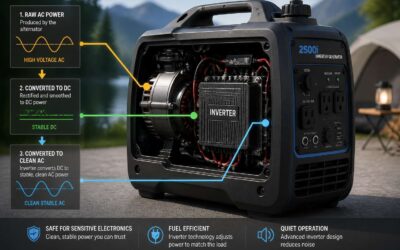
Japan answers the question of where are generators made with a marriage of advanced electronics and meticulous craftsmanship. The country’s manufacturers focus on quiet operation, fuel efficiency, and smart control systems. They often integrate inverters that adjust output to match load, which reduces wear and extends engine life. That appeals to hospitals, data centres, and telecom towers across South Africa. Some models feature digital monitoring and remote start capabilities. Consider common applications:
– Standby power for hospitals and clinics
– Backup for server rooms and telecommunications
– Premium portable units for caravan and outdoor use
Japanese factories are not the largest, but their consistency is remarkable. Components are sourced from domestic suppliers and assembled under strict quality control. This approach ensures that each unit meets its specification. When you ask where are generators made, Japan offers a compelling answer for buyers who value longevity and advanced features over raw power.
Other Notable Manufacturers in Southeast Asia
Southeast Asia has quietly become a forceful answer to the question of where are generators are made, particularly for buyers who need dependable power without the premium price tag of Japanese or German equipment. Thailand and Vietnam have developed robust supply chains that feed both domestic demand and export markets across Africa. These factories are not the largest in the world, but their operational flexibility is a practical advantage for South African distributors.
The production focus here leans toward durability and ease of maintenance. Many manufacturers in this region build generators with simplified control panels and robust mechanical components, which makes them forgiving in harsh conditions. One notable strength is the localised sourcing of raw materials, reducing lead times for export orders.
A quick comparison of manufacturing strengths in the region reveals:
This shift in production geography matters. When you ask where are generators made for the South African market, Southeast Asia offers a balance of cost and practical engineering that larger producers often miss.
Leading Manufacturers and Their Origins
Cummins: American Roots, Global Reach
Clessie Cummins founded his company in Columbus, Indiana, in 1919. This American base remains the engineering hub, yet the manufacturing footprint is intentionally worldwide.
If you ask where are generators made under the Cummins banner, the answer is a coordinated global network. Core design and research stay in North America, while assembly and testing move closer to customers to reduce lead times.
Their strategic layout includes:
- Manufacturing centers in Mexico and Brazil to supply the Americas.
- European plants dedicated to meeting strict regional emission rules.
- Assembly operations in South Africa for direct local market support.
This model preserves the engineering heritage of Indiana while leveraging international capabilities. A Cummins generator carries American foundational design into global energy landscapes, including the South African grid.
Generac: From Wisconsin to Worldwide
Generac began in a garage in Waukesha, Wisconsin, back in 1959. Two engineers, Robert Kern and Ralph Hoerig, were looking for an affordable backup power option. That first portable generator grew into a multinational empire. But the question of where are generators made today has a layered answer for this brand.
Their core production remains stateside. Large facilities in Wisconsin and Ohio handle engine assembly and final unit builds. However, they have expanded strategically to meet global demand.
– A plant in Juarez, Mexico, manufactures smaller portable units.
– A facility in Oshkosh, Wisconsin, focuses on commercial standby systems.
– Recent investments have targeted battery and energy storage production.
So when you ask where are generators made by Generac, the answer spans North America. The engineering heart stays in Wisconsin, but the footprint has widened considerably across the border and into new technology sectors. This blend of regional roots and cross-border manufacturing defines their approach.
Honda Power Equipment: Japanese Innovation
I find it telling that Honda Power Equipment started with a tiny engine strapped to a bicycle in 1948. That obsession with compact power still guides their factories. So where are generators made for this Japanese innovator? Not in one place! Honda builds units across Japan, the United States, and Thailand, each site mastering a different slice of production.
Their Kumamoto plant in Japan handles precision engine work, pushing fuel efficiency to extremes. Across the Pacific, the Swepsonville facility in North Carolina assembles larger industrial generators for the Americas. Meanwhile, Thailand’s Ayutthaya operation supplies portable models across Asia.
- Kumamoto, Japan: advanced engine blocks
- Swepsonville, USA: industrial units
- Ayutthaya, Thailand: portable generators
Honestly, that global split is why the straightforward question of where are generators made loses clarity. For Honda, it depends on what you need and where you live.
Yanmar: Marine and Industrial Excellence
In 1912, a young engineer named Magokichi Yamaoka built Japan’s first small diesel engine in Osaka. That single act set Yanmar on a path that would define its identity: dense, reliable power for people who work with water and earth. For Yanmar, the answer to where are generators made is anchored in its home base, but it is not limited to Japan.
The company’s core engine production remains in Okayama, where technicians obsess over combustion efficiency for marine generators. But the global picture has expanded. Yanmar operates assembly facilities in Europe and the Americas, tailoring industrial units for regional electrical standards and emissions rules. Their production network reflects a regional strategy rather than a monolithic one.
- Okayama, Japan: high-precision diesel engines for marine and industrial sets
- Europe: final assembly and control system integration
- The Americas: localized power units for construction and agriculture
This decentralization matters. A port operator in Durban needs a different machine than a farmer in Mpumalanga. Yanmar’s approach ensures each unit is built for its destination, not for a generic global shelf.
Kohler: A Century of American Craftsmanship
Kohler began with cast iron bathtubs, which sounds about as far from generators as Wisconsin is from a tropical beach. But the same metallurgical obsession that made those tubs famous now goes into their power systems. When you ask where are generators made with serious industrial pretensions, Kohler’s factory in Kohler, Wisconsin answers with a resounding thud of cast iron and copper.
Their generators are assembled in the United States, with engines sourced from their own line and partners. For South African buyers, this means a machine built to American electrical standards, then adapted for local conditions. It is not exotic, but it is stubbornly reliable.
Factors Influencing Manufacturing Locations
Proximity to Raw Materials and Supply Chains
Steel, copper, and rare earth magnets do not travel cheaply. A factory in Ohio sources its laminations from a mill within 300 kilometres. A rival plant in Vietnam imports the same gauge from South Korea. Freight cost shapes price more than labour rates do. I have watched supply chain managers redraw production maps after a single port congestion event!
Proximity to raw materials explains why foundries cluster near iron ore deposits and aluminium smelters. Generator frames, rotors, and housings are heavy. Shipping them across oceans consumes margin. Manufacturers gather where metal, workforce, and distribution networks already exist. The answer to where are generators made often depends less on brand heritage and more on access to cheap inputs and reliable logistics.
- Copper winding suppliers synchronise delivery with assembly schedules
- Casting foundries need consistent scrap metal supply
- Logistics hubs reduce export shipping costs
Labor Costs and Skilled Workforce Availability
Some production planners claim a generator is only as good as the hands that assemble it. I have seen facilities with gleaming robotics still struggle, while a plant in a modest industrial park thrives because a veteran technician can true a rotor by feel. The calculus for where are generators made balances wage rates against the cost of mistakes.
Labour rates influence the baseline price, but the availability of specialised talent often overrides that saving. A factory needs engineers who understand excitation systems, welders certified for high-tolerance frames, and test technicians who can diagnose a fault before it reaches a customer. This skill pool takes decades to cultivate.
– Windings must be inserted with precision to avoid hot spots.
– Alignment of the drive shaft demands experienced millwrights.
– Control panel wiring requires certified electricians.
Countries with strong vocational training programmes attract manufacturers despite higher hourly wages. The risk of a failed batch in a low-skill environment can erase any labour cost advantage. That tension defines every production map. The true answer to where are generators made is often written in the training syllabi of the local technical colleges, not just the payroll ledger.
A skilled workforce also shortens the learning curve for new models. When a design changes, experienced teams adapt faster and maintain quality. This agility keeps production onshore even when offshore wages tempt. The final choice always returns to human capability, because machines only execute what skilled minds direct.
Regulatory Environment and Trade Agreements
But regulations and trade pacts can override even the most skilled workforce. Emission rules in the European Union push manufacturers toward cleaner designs, while tariffs on imported steel can erase a low-wage advantage overnight. Certification bodies demand rigorous testing, and local content laws may require a certain percentage of components to be sourced domestically.
These factors directly influence where are generators made. A plant in a country with stable trade pacts, like the African Continental Free Trade Area, gains easier access to regional markets. Conversely, a sudden anti-dumping duty can force a manufacturer to shift production entirely.
- Import duties on finished units versus components
- Emissions and noise regulations
- Local content and ownership requirements
- Export incentives and free trade zones
Each rule reshapes the cost structure, and the final location reflects legal strategy as much as engineering skill.
Access to Major Shipping Ports
Ask any logistics manager about factory siting, and the answer will involve ports. Generators are heavy, awkward cargo, and shipping costs can decide a product’s viability. Proximity to major shipping ports slashes inland trucking expenses, reduces lead times, and simplifies export paperwork.
Consider how ports shape decisions about where are generators made. A plant in Durban can load a container onto a vessel bound for West Africa in hours. Inland factories face congested rail lines and unpredictable fuel prices.
- Container handling fees per unit
- Dwell time at port terminals
- Availability of roll-on/roll-off vessels for oversized units
Each variable nudges manufacturers toward coastal sites. For South African buyers, that means local brands sourcing from port cities may offer shorter delivery windows and better spare parts availability.
Domestic Demand and Export Opportunities
Domestic demand shapes factory output long before export contracts are signed. A manufacturer with healthy local orders can stabilise production schedules, invest in tooling, and negotiate better component pricing. That foundation matters when answering where are generators made, because export growth usually follows a proven home market.
South Africa’s own appetite for backup power, mining equipment, and agricultural units has supported several assembly operations. Those plants then convert local insight into exports across SADC nations. Neighbouring markets face similar loadshedding schedules and infrastructure constraints. Shipping a container to Maputo or Lusaka costs far less than airfreight, and regional trade agreements remove many customs hurdles. As a result, a factory can serve both domestic buyers and nearby exporters without doubling its footprint. Balanced demand reduces idle capacity, which keeps prices competitive for everyone, and the pattern continues to shape where are generators made across the continent.
Regional Specializations
North America: Focus on Standby and Portable Generators
Ask where are generators made, and you will often find a territorial war between the snowbelt and the sunbelt. The Great Lakes rust belt still anchors the heavy standby assembly lines, where robust diesel units for ice storms and blizzards require massive fabrication shops and seasoned machinists.
Further south, the sunbelt states pivot to portable gas inverters, prioritizing lighter frames and quieter operation for construction sites and tailgate parties. The regional split is stark:
- Standby units: engineered for permanent installation, built to endure sub-zero temperatures.
- Portable units: mass-produced in warmer climates, optimised for weight and decibel levels.
Canada contributes a niche of cold-weather rated portables from Quebec and Ontario, handling the -40 degree Celsius start-up calibrations that southern plants simply cannot test for. This answers the question of where are generators made in North America; it all depends on whether you plan to survive a blizzard or just want to brew coffee at a campsite.
Europe: Emission-Compliant and Industrial Models
Generators are manufactured across the globe, with production hubs determined by power output, application, and cost efficiency. For industrial and commercial buyers, the answer to where are generators made often points to the United States. Caterpillar and Cummins produce heavy-duty units in Illinois and Indiana, respectively. These factories specialise in high-capacity diesel models for hospitals, data centers, and construction sites. Generac, another American firm, operates facilities in Wisconsin and Texas, focusing on residential standby systems. The manufacturing process in these plants involves stringent quality control, with each unit tested under load before shipment.
Asia holds a dominant position for portable and mid-range generators. China produces the largest volume globally, with companies like Chongqing Loncin and Wuxi Kipor exporting to over 150 countries. Japan also counts as a key source where are generators made, with Honda and Yamaha operating plants in Hamamatsu and Shizuoka. These sites prioritise lightweight inverter technology and fuel efficiency. India contributes through Kirloskar and Mahindra Powerol in Pune and Chennai, offering rugged models suited for regional power outages. The cost of labor and raw materials in Asia keeps production competitive, allowing for lower price points without sacrificing basic reliability.
Europe maintains a niche for premium and specialty generators. Germany is responsible for Hatz Diesel, a manufacturer of compact industrial engines in Ruhstorf. Italy produces both Lombardini and Mosa units, focusing on welding generators and silent series for urban environments. The UK also has a presence through Clarke and F G Wilson, which build systems in Belfast. These European factories emphasise engineering precision and low emissions, meeting strict EU regulations. Buyers seeking long service intervals often look to these sources when considering where are generators made.
South Africa relies on imports from these regions to satisfy local demand. Distributors bring in Chinese models for household backup and American or European units for mining and agricultural operations. There is also a small assembly sector in Johannesburg and Durban, where companies fit alternators and control panels to imported engines. This practice tailors generators to local voltage requirements and fuel types, including diesel and gas. However, the original engine block still comes from a foreign factory. For a South African business, the origin matters for spare part availability and warranty support. A generator built in Shanghai offers quick delivery and low cost, while one assembled in the US provides robust performance under continuous heavy load.
The decision on where are generators made should also account for after-sales service. Japanese and German machines have extensive dealer networks in Gauteng and the Western Cape. Chinese brands have improved their local stockists, but some models require longer lead times for replacement components. The manufacturing country also influences noise levels and fuel consumption. European and American designs typically have advanced soundproofing and electronic controls, whereas Asian versions focus on simplicity and ease of maintenance. Each factory has its own testing standards, which affect the unit’s lifespan. Knowing the exact location of production helps a buyer predict the generator’s behaviour in South Africa’s variable grid conditions.
Asia-Pacific: High-Volume, Cost-Effective Production
When expanding the search for where are generators made, the Asia-Pacific region demands attention beyond its largest names. Taiwan and South Korea supply sophisticated inverter components and alternator cores. Thailand and Vietnam host assembly operations that feed Australian and Middle Eastern markets. These countries benefit from dense component networks. Raw materials, from copper windings to steel housings, move across borders with minimal friction.
The cost advantage is structural. Labour remains affordable, but the real savings come from vertical integration. A single facility might stamp frames, wind coils, and test finished units without outsourcing steps. This shortens production cycles and cuts logistics expenses.
Key characteristics of Asia-Pacific production:
– Scalable manufacturing lines that shift between output levels quickly
– Standardised components shared across multiple brands
– Export-focused quality checks for compliance with international voltage standards
Buyers who research where are generators made often land here for workhorse models that balance price with dependable operation.
Latin America: Emerging Production for Local Markets
Latin America is emerging as a production zone for generators aimed at local markets. Brazil and Mexico lead the way, with assembly plants that cater to domestic energy needs. These facilities often import engines and electronic controls, while fabricating frames and fuel tanks in-house. The result is dependable machines for farms and construction sites without the high cost of imported units.
Cheaper labour does not make this region a global export hub. Instead, manufacturers benefit from proximity to customers. Trade blocs like MERCOSUR ease cross-border movement of parts. Buyers who ask where are generators made now find a growing answer in Latin America.
Middle East and Africa: Niche Oil and Gas Generators
In the Middle East and Africa, the answer to where are generators made is a niche oil and gas sector. Manufacturers in the UAE, Saudi Arabia, and South Africa build machines for extreme conditions, focusing on durability rather than low cost. They assemble units with custom cooling systems and flame-proof enclosures, often adapting imported engines.
Production here serves local refineries, drilling sites, and petrochemical plants. South African factories, in particular, supply robust generators for mining and offshore platforms, exporting to nearby African markets.
I have seen how these operations do not compete with Asia or Europe. Instead, they provide specialized equipment that withstands sand, heat, and corrosive gases. That is a demanding niche but a reliable one! Buyers who need power in harsh environments look to this region, where the manufacturing process caters directly to oil and gas needs.
The Future of Generator Manufacturing
Automation and Smart Factory Trends
Factory floors in the generator industry are changing. The question of where are generators made now involves software as much as steel. Smart factories use sensors to track every assembly step, which reduces defects and shortens lead times.
Automation does not remove the need for skilled workers. It shifts their role. Technicians monitor robotic arms and interpret data streams. For South African buyers, this means consistent quality and faster delivery, no matter the production country.
Key trends shaping production:
- Predictive maintenance on assembly lines
- Digital twin simulations for testing
- Real time supply chain tracking
Shift Toward Cleaner and Hybrid Technologies
The transition to cleaner and hybrid technologies is redrawing the map of where are generators made. Manufacturers in established hubs and emerging nations are investing in battery-integrated systems and hydrogen-ready frames. This shift is reshaping assembly lines from scratch.
For South African buyers, the practical result is shorter testing cycles for hybrid units and more attention to inverter and control software. New production methods include:
- Modular battery bays that fit multiple fuel types
- Regenerative load banks for factory testing
- Software calibration for grid stability
These changes are visible in factories from Durban to Shenzhen. The question of where are generators made now includes a second layer: which factories can certify emissions and integrate renewables. Manufacturing location increasingly determines technology access.
Nearshoring and Diversification of Production
The old answer to where are generators made is fading fast. A decade ago, the map centered on massive Asian export hubs. Today, resilience dictates geography. Freight costs and supply shocks push manufacturers toward nearshoring, building closer to buyers in Africa, Europe, and the Americas.
Diversification is the second major driver. Rather than concentrate output in one country, producers now split capacity across multiple plants. This cuts the risk of factory closures halting global deliveries.
For South African buyers, this means shorter lead times and easier compliance with local grid standards. The shift relies on tangible benefits:
- Lower transport emissions and fuel surcharges.
- Direct alignment with regional voltage and frequency requirements.
- Faster warranty service without international freight.
- Easier integration with local smart grid and hybrid energy projects.
The next decade will see generator assembly scattered across regional hubs rather than clustered in one nation. As automation lowers labor dependence, proximity to the customer outweighs historical cost advantages. This evolution makes where are generators made a matter of strategic logistics, not just cheap labor.
Impact of Global Supply Chain Disruptions
Ask ten manufacturers where are generators made and you will get ten different answers, each shaped by the most recent shipping crisis. Global supply chain disruptions have done more to redraw production maps than any long term corporate strategy. A factory in Texas ships controllers to Poland, engines from India meet alternators from Vietnam at a final assembly plant in Johannesburg.
Semiconductor shortages delayed control system deliveries for months. Steel tariffs shifted sourcing patterns. Container shipping costs fluctuated sharply, pushing some producers to assemble closer to customers.
- Component shortages force manufacturers to juggle suppliers across multiple countries.
- Final assembly now often happens near the buyer, not near the cheapest labour.
- Lead times depend on port congestion and customs delays more than factory output.
For South African buyers, the practical effect is straightforward: where are generators made now influences lead times, pricing, and warranty terms. Securing a generator requires earlier planning and a willingness to accept regional assembly as the new normal.
Innovations in Materials and Design
The future of generator manufacturing hinges less on raw assembly locations and more on the materials and intelligence baked into the machinery. Advanced composite housings are replacing heavy steel, offering corrosion resistance without the weight penalty. This shift changes the cost equation for transport and installation, and it quietly alters where are generators made, as lighter components are cheaper to ship across borders.
Design is moving toward modularity. A single base frame can now host a diesel, gas, or hybrid power core, allowing factories to standardize production. This reduces the need for multiple specialized plants. Thermal management is also evolving, with new-phase change materials that absorb heat more efficiently, extending component life in harsh climates.
– Predictive diagnostics embedded in control panels.
– High temperature superconductors for compact windings.
– 3D printed alternator housings from recycled alloys.
These innovations mean the physical factory footprint matters less. The intellectual property and the precision tooling define the product, not the geographic origin. For the buyer, this reinforces that where are generators made is becoming a less reliable indicator of quality than the specific manufacturing processes and material certifications employed. The trend points to specialized, tech-driven hubs rather than vast, low-skilled assembly lines.

0 Comments